Skip to the insights

Executive Insights

Practical thinking for leaders growing into bigger scope.

Essays and useful perspectives on judgment, influence, communication, leadership transitions, and the choices that become more consequential as your role expands.

A refined executive workspace with an open notebook, brass pen, and city view
LeadershipInfluenceTransitions

Browse by Topic

Follow the leadership question that matters now.

Choose a topic or search the complete library for a specific question.

Featured Insight

When being the answer stops being the highest-value work.

A brass compass with multiple decision paths extending outward

Leadership Leverage

If Every Decision Leads Back to You, That’s Not Leadership. That’s Dependency.

Strong leaders often become the fastest route to a sound decision. That strength can quietly become a bottleneck when the team learns to bring every uncertain choice back to the leader.

This essay examines how to turn instinct into visible standards—clear principles, priorities, thresholds, and examples—so other capable leaders can exercise good judgment without waiting for an answer.

Read the Featured Insight

More Leadership Insights

Explore the rest of the Insight Library.

Browse other leadership essays by topic or follow the question that feels most relevant.

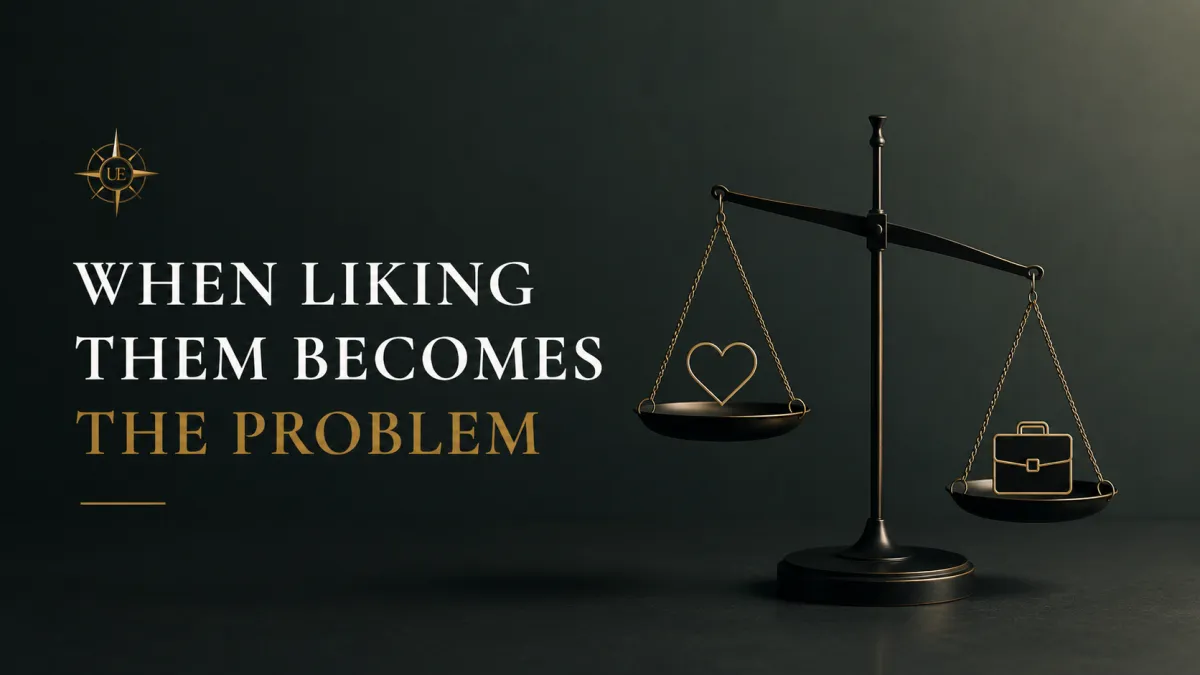
When liking them becomes a problem text with an image of a scale.  On one side is a heart.  On the other side of the scale is a briefcase.

When Liking Someone Gets in the Way of Leadership

April 12, 2026•2 min read

You’ve got someone on your team you genuinely like.

They show up. They’re positive. They don’t create drama. If anything, they make your day easier in small ways.

In meetings, they contribute—but not at the level you need. Deadlines slip just enough to notice. The work is… fine. Not wrong. Not strong.

You’ve had a few conversations.

Nothing direct. More like:

“Let’s tighten this up.”
“Try to stay ahead of timelines.”
“I know you’ve got a lot going on.”

They nod. They agree.

And then… nothing really changes.

You still like them.

But the gap is still there.


What’s Actually Happening

You’re avoiding tension.

Not in an obvious way. In a reasonable way.

  • You soften the feedback

  • You adjust your tone

  • You choose timing that feels less confrontational

It sounds thoughtful. It feels fair.

But here’s what’s actually happening:

You’re protecting the relationship at the expense of the role.

And you’re hoping the situation corrects itself without requiring you to create discomfort.

It usually doesn’t.


What It Costs

The impact spreads.

Your team sees that this person is held to a different standard.

No one says it out loud. They don’t need to.

They adjust their expectations of you.

  • Standards start to loosen

  • Accountability becomes uneven

  • Strong performers notice—and pull back slightly

And you carry the situation longer than necessary.

You think about it more than you should. You replay what you could say. You look for a smoother way to handle it.

All of that is the cost of not being direct once.


What Works

At some point, this stops being about the person.

It becomes about the role.

The shift is simple:

  • Separate the person from the role

  • Be direct about the gap

  • Anchor the conversation in expectations

Not intention. Not effort. Not personality.

The role requires a certain level of performance.

Either it’s happening, or it isn’t.

When you stay there, the conversation becomes cleaner.

Less emotional. More useful.


Practical Move

Before you say anything, get clear for yourself.

Write down:

  • What’s not working

  • What needs to change

Be specific.

Not “be more proactive.”
But: “Deadlines are being missed by 1–2 days, and updates aren’t being communicated.”

Then say it in one conversation.

Clear. Direct. No buildup.

The gap. The expectation. What needs to happen next.


Bottom Line

Leadership isn’t about how you feel about someone.

It’s about what the role requires.
leadership accountabilitydifficult conversationsunderperformanceteam standardsdirect feedbackleadership decisions
blog author image

Kole Finley

Kole Finley is a PCC and CPIC-certified executive coach with nearly three decades of coaching experience, helping high-capacity leaders turn hidden capability into visible executive influence, stronger decision quality, and greater leadership leverage.

Back to Blog

When Insight Points to Action

Bring the leadership question you are ready to work through.

A private 40-minute conversation gives us room to understand what is happening, what you want to create, and whether coaching is the right next step.

Start a Conversation